Wednesday, December 17, 2008

Rome Galleries

Rome is, without a doubt, a very rich city in art, especially its various galleries and Palazzios. My favorite ones from what i had time to explore follow:

If you have time for only one, definitely go to the Borgese Gallery. It is situated in a calm and romantic garden, and preserves incredible works, especially several statues by Bernini, the inventor of Barocco, and the third genious Italian sculptor in the direct Donatello-Michelangelo line.

One has to see Daphne and Apollo to believe it. It captures the moment when Daphne is transforming into a tree while still being chased by lustful Apollo, the picture hardly represents the life-like, pure emotion syrup:


And this view of David in motion:Another rich Palazzo-museum is the Capitolian one, situated on Michelangelo's Campodoglia, the perfect plazza. It is full of Roman and Greek statues from various excavations, and is itself situated where the old Jupiter temple used to stand on the Capitolian hill, the center of Roman civillization. The museum also beholds the bronze statue of the wolverine that supposedly fed Romulus and his brother Remus in their infancy, before they founded the eternal city.


Another interesting visit has been to the Medici Villa and its gardens. They are only accessible on specific times as it is still the residence of the young French Rome prize winners for art. The villa is situated on another hill, close to the Plaza de Spagna, with very beautiful views of the Rome panorama, but also incredible gardens:
It is easier to understand seeing these gardens how painting would start incorporating perspective into its quarters. Numerous French artists lived in the villa, such as Debussy or Berlioz, Ingres was its director for years, Velasques painted the below arch in his paintings several times. All of these references, and a knowledgeable guide speaking both, Italian and French, make the garden visit a must for the art-inclined.

Bellini expo at the Scuderie de Quirinale is worth a glimpse - it highlights the artist's journey from Messina's influence to the final mastery, as with this Christ with the cross from the Isabella Gardner Museum:


and the Pieta:


I also enjoyed Barberini Palace and its Carravagios as well as the Colonna gallery (only open on Saturday mornings), still reserving its very beautiful decoration and marble floors for the curious souls. Less impresive, although possible visits are the Spada, Corsini, and Venezzia Palazzos, all full of further works of art.

I did forget about the ancient Rome here, but there were just too many museums to see...to pay tribute to the Romans, here we go:


Oh, and Merry Christmas to everyone:

Tuesday, December 16, 2008

Vatican

Today I have spent the day in the Vatican, the other of the three countries represented in Rome (Maltese order apparently has the third official country in Rome since they have been thrown out of the Malta island in the 19th century and kindly welcomed by the Pope in Rome).

It is definitely a very impressive place, especially the San Pietro Basilic and its incredible size. It is difficult to comprehend, given that a small plane can fly inside the 100m dome, or that the baldanchin below by Bernini is 30m high. As a side note, the bronze to make this baldachin comes from the roof of the Pantheon. As the romans say - what the Barbarians did not manage to distroy, the Barberini did (the family of the Pope who dared):

The Swiss guard is still guarding the Pope:

But the jewel of it all is the treasure of the Vatican museum, or museums as there are 14 of them. Not as big as Louvre, it took me all 6 hours to make a complete tour - and several rooms were closed for that. Below is the statue of Laocoon, a good start to understant a little bit better the forms Michel Angelo painted in the Sixtine:


And here is Michel Angelo, as depicted by his rival, Rafael, on his incredible stanza of Athene School. While Rafael was working on the rooms of the palace, Michel Angelo was painting the Sixtine Chapel - both started the same year!


It is said that Michel Angelo did not allow anyone to see his work except for the Pope. Rafael stole a glimpse and was so impressed that he had to change his own style to introduce Michel"s muscular ways (i.e. the knees of this Michel Angelo...). Notice the girl in the left corner - she and Rafael himself are the only ones in this picture looking directly at the visitor. An apparition, similar to Rembrand"s angel in the Ronda painting.

And not to forget the master, here is a detail from the Sixtine Chapel"s roof, the God father himself, in the process of creating the Sun and the Moon:


Nothing, no other Pieta, can meet the standards sat up by this work of a 23-year old, unspoilt like his marble, Michel Angelo entering the world of Art:

Rome, the First Sight


My first encounter with Rome has been rainy and rather sad - as the above picture of Mary Maggiore Basilic, one of the four dedicated to the Virgin and worth a visit.

It took me some time to start appreciating the views - it all began here, in the cloister of Giovanni the Laterano cathedral, reminding me of Barcelona, Toledo, and the mystery of faith - of which Rome is definitely full of:


This is the inside of the cathedral, where only the Pope can celebrate in front of the altar beneath the baldachin - they love baldachins here (the four-pillared thing in the middle, yes, i did not know what a baldachin meant in a church either...)


Laterano cathedral is impressive - especially if visited before San Pedro. The most stunning for me ware these Saint Stairs: the legend says it was Constantin"s mother who brought the marble stairs, now covered with wood for preservation, from Jerusalem. It is the most impressive relique I have seen so far! They were originally the stairs of Pilate"s palace on which Jesus walked to be judged...Now they are walked on knees only by the piligrims...


Here is the last site - to finally fall in love, despite the rain and the cold with the Eternal one:

Monday, December 08, 2008

Veloso, Canteca de Macao and Macaco

Continuing on the Spanish-language music trend i am keen on exploring lately, below is the incredible Tonada de luna llena from Veloso i first heard in ¨Flor de mi secreto¨ by Almodavar:


And more from Canteca de Macao in a different vein, but also interesting and very very spanish...


And a third one, Macaco, an international mix from Barna, still another genre...

Vilanova y Cubells


This cold winter w-end we decided to sample Vilanova. I have never yet been to this crag, thus we aimed at Nicromancer, an easy 4-pitch route. Finally we ended on a different neighbor in cold winter wind, which made us quickly decide for sport climbing nearby in more clement conditions.

The second day we went to a sport crag, Cubells, with incredible light, good climbs and almost shirt-less climbing. Below myself on a nice 6b (pic by Cathy):


And Cathy, sampe place, really great pic:

Monday, November 24, 2008

Montserrat - la Desdentegada


With many people involved in climbing this w-end, we explored the sector of Desdentegada (meaning without teeth) in Montserrat South sport climbing paradise. Some info (although in Catalan, and you have to have at least some idea about Montserrat to use it) is on OnaClimb, topos themselves are here when clicking on Montserrat map and going to Vermeil sector in the upper-left, as they are not available in the Montserrat South sport climbing guide in case you wondered...


(there is a climber in the middle of the pic above...this is actually on the opposite side from Desdentegada, at the Castells area i believe)

We managed several routes in both days, although not exploring all the potential of the sector. It boasts an exceptional 6c (#28 on the topo), and many long sustained face climbs from 6a to around 7a. It also is sunny most of the day, definitely a recommendable winter destination!

Tuesday, November 18, 2008

Terradets

This finde was very productive in terms of climbing for me - finally i managed to get up the Terradets wall, pared de las Bagasses. With Rodrigo and Marcial, we scaled the beautiful Smoking, a route for girls - with awesome moves on tiny feet, all technique and less strength. Here is Rodrigo figuring it all out:


Despite the sun, it is clearly almost winter here, and because of the cold, we spent some time sport climbing in Os de Balaguer, a much warmer place to change back to summer again:

And finally the jewel, scaling Mescalina, a long and sustained line in the middle of Bagasses, that rewarded us with this view in the end, the snow-capped Pyrenees:

And several objectives remain - el Peladet:

And Roca Regina por supuesto:

Delinquentes

Another Spanish group - los Delinquentes que me encanta en este momento -

With Primavera


and this one -


and this one -

Wednesday, November 12, 2008

Jarabe de Palo

It has been a while i did not discover an interesting group - and here it goes again, thanks to Rafa!, Jarabe de Palo (understanding that name in Spanish is already a challenge), it is a lot of fun!


And


And the old classic:

Tuesday, November 11, 2008

Siurana


This w-end i treated myself to some long-needed climbing after the rain-induced hiatus of the previous week. The action took place on the tasty Siurana walls, where we not only checked out la Rambla, but also climbed a couple of neighboring routes while some Russians were cracking harder stuff - picture of one of the Russians on an impressive 7b below.


Siurana definitely has good routes, although we managed to also find rather scarecely bolted 6b to finish the day at Can Gan Dionis sector. The bad luck continued on during the second day in La Mussara, where we managed to

- get on a 5c that kicked my and Rodrigo´s butts on an unfortunate warm-up choice
- get on a 6a with 30-year old bolts
- get on another 6a the second part of which has fallen off, leaving a blank, unbolted wall

And all that after an almost sleepless night at the La Mussara Refuge - recommended for its good and plenty dinner, but where the good luck had 5 out of 10 people producing all kinds of strange noises during the whole night...

(Amador - has copies of Costa Brava and other topos in "otras zonas de escalada")

Monday, November 03, 2008

Salvaging a Day

I got up, gave a thought to the futility of life, had my cornflakes and made myself an odorous cup of coffee. The rain was pouring relentlessly, making it the day you would want to only stay in bed and count different stars from your dreams. But my bed was empty and was starting to become cold as well.


I spent the first hours writing my report on Drucker, the management classic theorist. Finally, at least one I’ve heard about and even read from before starting my PhD. His ideas did determine to an extent management practices in the last 60 years, it was thus not a futile exercise, although I would not say it was not completely boring. It required some degree of self-motivation every half an hour or so mainly based on a sugar intake.


Writing my report, I kept staring at my filthy windows with a view to my street. After several hours of filth, I decided to give them a long-needed wash, and, in the same time, improve my life outlook. Window is an interesting parabola – it can give outside or inside, be a door to the world, or a door to the soul. It is a symbol of freedom, but also Microsoft’s monopoly. Freedom to look, but not touch. What better, then, than to wash a window, to make you open it and destroy its pervasive span of control?


The next step was starting another book, Herbert Simon, another management classic, on whom soon I would have to write another report. The vicious circle of studying – that was my aim, to force myself into it, to get away from the futility of life questions and 8 to 5 altitude. Not that I am complaining!


After taking care of the physical need for a palpable food intake and attending to some beauty concerns with a purifying green substance the happy young Drucker-inspired marketing people call a mask that will save your face and make you young forever, and reading some more pages and engaging in more sugar intakes, I decided that my day needed some salvaging.


The rain had stopped, the streets were humid but drying, the outside finally looked appeased out of my window. I had to be out there. I started by rollerblading down to plaça de Lesseps, an interesting undertaking that required some care and muscle power to manage. It became more fun later, when slopes eased down to my likings, I remembered the good feeling of that old forgotten freedom rollerblading gives, the epitome of free will, go right, or left, the power of a motion. The car is similar, but it is less exciting – it is so easy to discount it, just go from place A to place B, while not participating at all in the environment during the journey. Rollerblading might be closer to the horse riding in the sense that it makes you fully aware of the outside, of the necessity to manage it and to look it into the eyes and say yes to its risk and challenges. Yes, it is the man-created and man-dominated outside, with car-monsters to avoid, and bus-dragons to by-pass, and human ogres to handle, but still it is refreshingly participative, refreshingly alive.


It has been a while I have stopped rollerblading for the sake of rollerblading, thus my first objective was Rodchenko expo at la Pedrera. I respect La Caixa for their effort to invest in a tangible benefit to society – and I find it very useful for my empty student pocket to be able to attend its high-quality expositions. I didnot know much about Rodchenko, he nicely connected what I already knew about Mayakovskiy and Lilly Brick with his pictures of the two and illustrations to Mayakovskiy.
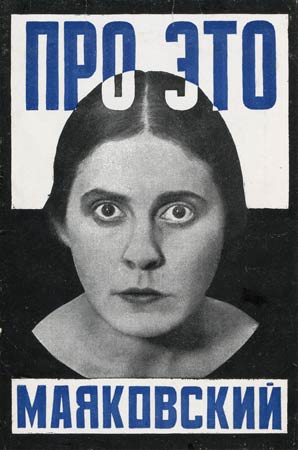


It is a very interesting perspective to think today of the 20ies, the beginning and the excitement of the Soviet Union. Later, when I stopped by the Mucha exposition at the Caixa Forum, I saw Mucha’s photos of the Red Square in 1914. It looked so much like Perou – bespectacled Mucha among these Russian peasant women with a scarf wrapped like Arab women around their heads, like my grand mother does in the Carpathians, poor and rugged, transpiring poverty and desperation. And then (or rather before given my La Pedrera – Forum circuit) Rodchenko’s lineum and constructivism, the enthusiasm of empowering these people, of trying to work it out, of getting them to the power wheel. It is such a pity all that enthusiasm finished with a blood-thirsty dictator, a failure that destroyed so many lives, and preconditioned so many others.


The above look on Mayakovskiy’s face (picture by Rodchenko) said it all, those pictures are good. They made me want to read through “Pro Eto” and see the “Bedbug” play where the young Shostakovitch composed the score, and Rodchenko, like Picasso around the same time, designed the costumes. But that was the end of the happy times. The 30ies were around the corner, and the fun was soon to be over.


My next stop, as already announced, was the CaixaForum, another art investment by socially responsible bank. It was very appropriate to hold a Mucha exposition in this Art Nouveau factory. The setting did make me think about Taylor and the scientific management of the time, the “Modern Times” Chaplin movie, and my PhD readings. Then Mucha took over – the big lover of women, the mysterious and so beautiful women of his! I am not sure where he found his inspiration – maybe in the same unfathomable abyss where his friend’s, Gaugain’s, monsters came from.
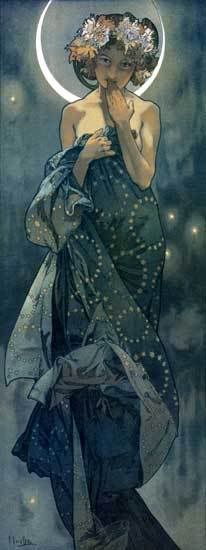


Besides women, marketing and packaging innovations that also rang a bell with the marketing efforts of the Soviet Union Rodchenko participated in, there were the photos. Not only of the Red Square tourist trip of the rich Bohemian, but also of Gaugin. Since Vargas Llosa’s “El paraiso en la otra esquina,” my image of Gaugin was so, oh, so much different than the one that randomly popped up in the Mucha photos archive. Anna la Javanaise looked herself, like she should look. But that moustache-man, playing piano without pants – he looked so orderly despite the absence of pants, so beginning of the century, so far from the revolt and the exotic countries and exotic destiny he chose for himself. Maybe he looked a little bit like Dali, but nothing like a salvaje, a syphilis-rotting genius-to-be baking in the sun of Les Marquises after another glass of whiskey paid with one of his chef-d’oeuvres to the local joint-owner. Life is so strange!


After these musings, or rather just undistinguished pieces of piece-meal ideas in my head, I headed to the ultimate aim – Fuxi, to get my climbing fix. After the couple of usual traverses of the tunnel, back I went home. The day has been salvaged. Sunday was on the way.

Monday, October 27, 2008

Tarragona region - La Mussara, and Montsant

This w-end i finally went South instead of North - and still found many things to do! The first day, with my newly found partner Rafael, we explored La Mussara crag in the very picturesque Prades range. Only 1000m high, these pequeñas montañas are perfect for autumn or winter climbing - with views to the sea on one side, and mountain feel to them on the other.


La Mussara is a high quality limestone crag of up to 100m high, with a variety of bolted or not routes available. We went for Hercules Incuarteable route (from 100 best of Cataluña book, old faithful), which is actually completely bolted, long, and roofy. It reminded me a little bit about the Gunks with many horizontal crack-o-roofs to pull through. We also did a somewhat easier, also bolted route on the left there.

The next objective was to try Rif, a harder, and less bolted 4-pitch, ¨perfect crack¨route. I managed to (with many rests) lead the first 5+ pitch, we failed on the secon (6a+) and never reached the upper ones. This route will have to wait for an improved trad-head! But the start was very nice - here is Rafael following the end of the first pitch:


The second day we decided to explore Montsant range. From afar it tricked me into thinking about it as a limestone crag - but as we figured after the approach it actually is as conglomerate as it gets, with pebbles pouring from under your feet with a vengence!


We went for the rock of Falconera (picture above) having in mind the Somm d´Estiu route from the same 100 best book. However we started with Gerard Artiges route on the left (where the shade appears in the center-left of the picture above). Again, after the first 2 pitches we bailed on the third pitch as the bolting got very scarce for our liking. Here is Rafael following the first pitch:


We finished the day with some relaxed cragging at Siurana - although not that relaxed given the rather hard grades we found. But the big old bolts and quality limestone compensated for the hardship! For those looking for topos of Tarragona region, especially Siurana, please have a look here in the "otras zonas de escalada" chapter.

Monday, October 20, 2008

Terradets and Os de Balaguer

This w-end we tried to climb in another new location - Terradets. A 500m limestone wall 10min from the car? Everything is possible in Spain - and welcome to Terradets! The Begasses wall (picture below, some detail here as well as in the Terradets topo) is very impressive - and you literally drive into it while passing the canyon before Terradets dam on the Tremp road. On one side, there is Montsec de Ares (Terradets climbnig walls are its left end), and on the right side the Montsec de Rubies (Vilanova being the climbing location there). Yes, sorting out Spanish namings for crags is not exactly easy!


Unfortunately, the forecast was right this time, and it rained, poured rather, the whole day of Saturday. We hardly could even hike, and explored various coffee offerings at the Alberg-Refugi de Cellers (the cheapest sleeping option 10 min from the walls at 12.5 per night and plenty of topos to explore), the Llac Cafeteria, and differenct cafes and bookshops in Tremp instead. Here is Cathy in front of the Regina wall, another impressive monster just behind the Begasses wall:


Sunday was more clement, but only time for sport climbing remained. We thus chose a conveniently situated sport crag in the canyon close to Os de Balaguer village (different from Alos de Balaguer, where there also is climbing!). It is a very good crag with various grades from 6a and up. Here is a climber on a 6b+ we tried, although i found this one harder than other 6bs there:


And another climber on another route, giving nice perspective of the whole canyon. We enjoyed ourselves as the grades were not exactly very hard and fitted nicely with our style. Definitely a place to come back to!


(Yes, the game is - find the climber! in the previous shots...) View of the Montsec d´Ares chain from Os de Balaguer village on a less rainy day. Autumn is coming!


Tuesday, October 14, 2008

Andorra


I also managed to visit Andorra for the first time last w-end. It reminded me of another hilly country - Switzerland. It is a pleasant location - some say overbuilt, but that is only the perspective one gets from the valley floor. View of the capital, Andorra la vella, above from up above.

Andorra is the sixth smallest nation in Europe, after Malta, Liechtenstein, San Marino, Monaco, and the Vatican City. It has also the highest life expectancy in the world (Wiki) and a very interesting history of how to stay independent for over 800 years with such neighbors as France and Spain encircling it from all sides. Just to keep your interest - its official rulers are both, the bishop of La Seu d´Urgell (yes, the climbing paradise) and Sarcozy!

Otherwise it is also known as tax haven with no income tax - and a ski paradise in winter. Its own native population forms only around 30%, the rest are residents from mainly Spain and France. It manages to strike a balance with all these heteroclit groups and prosper! Its national language is actually catalan - it embodies the independence the Spanish Cataluña has been trying to gain for so long. Overall an interesting refuge for mountain-lovers that want to live in the heart of Europe, close to both, Barcelona and its beach, and Toulouse and France´s industries.

Pared Bucolica, Obaga Negra, Alt Urgell

This w-end, despite the unfortunate weather forecast, we decided to sample the limestone of Pared Bucolica, in the neverending mine of rock, Alt Urgell. We chose Balsame del Tigre from 100 best of Cataluña for our route, hesitating with the easier alternative, very popular Tera de dinosaures (topo here). There is a nice overview of the whole wall here.

The approach is only 15 min and the scenery is very nice in spite of the road and the tunnels not that far away. The route is a very nice 6-pitch climbing - best being the first 3 pitches, and a hard cruxy 6a+ roof (me trying and finally failing to do it on lead below) comes on one before last.

As we definitely did not have enough after this, we went further down the road to sample the Obaga Negra sport climbing (topo here). It has a very nice collection of vertical 6a-bs just perfect for the girls :) We worked a couple of projects, and have to come back to finish one of them! Below myself on the final lead of Sense Pile:

Tuesday, October 07, 2008

Perles

The next day we went to the village of Perles, passing through another climbers´ bar that covers the near-by crags (Narieda, Perles, Col de Nargo - most of Alt Urgell stuff). This bar is called Tahussa and is located in the center of Col de Nargo village, serving awesome pan con tomate y queso (bread with cheese, Catalan way of having a sandwich in the morning).

Perles is a very high quality crag with mainly one to four pitch routes on classic grey limestone. One has to pay for the popularity - it was full with French, Andorrans and Spanish throughout the day. The topos can be found here. We started with the classic Amistades Pelirrojas that runs up the furthest crag to the left on the overview picture below.

It is a very nice 4-pitch route at around 6a, slab to vertical, suiting perfectly girls´ style. Here is Cathy enjoying herself:

Next, we went for the neighboring 4-pitch Puta de Mosques, with a harder first 6b pitch and very good two 6as after - the cherry on the cake being the traverse under the impressive roof. Here is Cathy following the second pitch after onsighting the first 6b:

And the roof traverse looks exactly like a postcard:


We finished the day with pleasant cragging at the bottom of the cliff and i even managed to find a ride back to Barcelona with engineers from the Spanish Antarctic Station!

St Llorenç de Montgai


This w-end turned out to be a perfect climbing w-end - clear weather, reasonable temperatures, new places, beautiful scenery - and a good partner. What else to want from life! (oh, yes, maybe a car...)


The first place we visited were the crags close to Montroig - Montsec range (overview above). This is a very relaxed climbing area, with a 3 min approach, not many other climbers around, and high quality limestone.

I also discovered the concept of a climbing bar in Spain - apparently most locations have their own hang-out spot, where the local developers would bring topos of routes. As there are dozens of topos, many of which out of print or out of date, that is the place where the most up-to-date information can be found.


However, there are a couple of challenges associated as well. First of all, to locate these bars is not always easy - they are usually normal bars (sometimes the only bar in the village), hidden off the big roads and not necessarily close to the crags in question. Oh, and guidebooks do not always mention them (i.e. 100 best Cataluña book). The only way to get there is by following a local. And second, the topos available are usually home-drawn art works, more valuable for their artistic quality rather than helpfulness.


After visiting such a bar, called Mirador del Lac, in St Llorenç village, we decided to stay with the originally planned route, Isaac Gabriel, from the 100 best guidebook. Despite the 3 min approach we managed to first get on the wrong start, but finally found our destination and deeply enjoyed this beauty and the view:


The route is rather short (5 pitches), which allowed us to check out a sport crag from the Salvatge Oest de Cataluña guidebook, close to the village of Alos de Balaguer. We tried some routes there and headed up to Alt Urgell for the next day´s adventures.